
Let’s be honest: nails get wrecked. Gel overuse, acrylics, picking, peeling, thyroid issues, postpartum, biting, harsh cleaners, dishwashing without gloves, or just genetics — suddenly you’re dealing with peeling, ridges, splits, white spots, yellowing, or paper-thin nails.
And the worst part? Damaged nails look worse with most manicures. That perfect sheer pink you love now highlights every ridge. Dark polish shows every peel on the edge. You feel stuck between “let them breathe” and “I don’t want to leave the house like this.”
Good news: you don’t have to hide your hands for 3 months while they recover. The right nail style can camouflage damage, prevent further breaks, and actually help them heal underneath. You can look polished while you’re repairing.
After talking to nail techs who specialize in natural nail rehab, dermatologists, and people who’ve rebuilt their nails from nubs, here are 21 nail styles that hide damage, add strength, and still look intentional. No shame, no lectures — just solutions that work.
First: What Counts as “Nail Damage” and Why Most Manicures Make It Look Worse
If your nails have any of these, you’re dealing with damage:
Peeling/Splitting: Layers of the nail plate lifting at the free edge. Looks like your nail is delaminating.
Ridges: Vertical lines from cuticle to tip. Usually age, trauma, or health-related.
Thin/Flexible/Bendy: Nail bends instead of holding shape. From over-filing, gel removal, or illness.
White Spots: Keratin granulations from polish or trauma.
Yellowing: From dark polish, smoking, or fungus.
Cracks: Horizontal or vertical splits that catch on everything.
Short Nail Beds from Biting: You want length, but have nothing to work with.
Why most polish makes it worse:
- Sheer pinks show every ridge. That “your nails but better” shade becomes “your damage but highlighted.”
- Dark creams show every chip. Damaged nails chip faster, so dark polish looks bad in 2 days.
- Long extensions stress the nail. If your nail plate is weak, adding length = more torque = more breaks.
- Matte finishes highlight texture. Every ridge casts a shadow.
So we need opacity, texture, strength, and short lengths. Here’s how.
The 5 Rules for Damage-Hiding Nails
1. Go short. Long length on damaged nails is asking for breaks. Active length = at the fingertip or 1mm past. The shorter, the stronger.
2. Go opaque or textured. Sheer is the enemy of ridges. You want coverage. Cream, glitter, metallic, or milky opaque finishes blur imperfections.
3. Pick round or squoval shapes. No corners. Corners on thin nails = immediate snags and tears. Round and square distribute pressure.
4. Add strength. This isn’t just polish. Builder gel, BIAB, dip, or structured gel gives back the thickness your nail lost. It’s armor while you heal.
5. Avoid “breathing” myths. Nails don’t breathe. They get oxygen from blood, not air. Keeping damaged nails bare often leads to more peeling. A protective layer is better.
Now, the 21 styles that actually work.
PART 1: CAMOUFLAGE COLOR STYLES — Hide Flaws With Polish
These use color and finish to blur ridges, spots, and discoloration.
1. Opaque Milky White
Not sheer — we want full coverage milky white. 2–3 coats. Short squoval.
Why it hides damage: Milky white is opaque enough to cover yellowing and white spots, but soft enough that chips aren’t obvious. The cloudy finish blurs ridges.
Best for: Yellowing, staining, uneven color.
Product: Essie Marshmallow, OPI Funny Bunny with 3 coats.
Maintenance: Gel only. White chips fast with regular polish.
Pro tip: This is the #1 salon trick for post-acrylic nails.
2. Solid Taupe/Greige Cream
Medium-dark neutral. Not too light, not too dark. Short round. Think Essie Chinchilly.
Why it hides damage: Mid-tone neutrals are the most forgiving. They don’t show tip wear like pale pink, and don’t show chips like black. Ridges disappear.
Best for: Ridges, peeling, and general wreckage. Universally flattering.
Maintenance: 2 weeks. Chips blend in.
3. Fine Glitter Over Nude
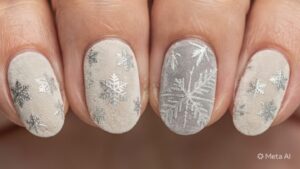
Nude base + fine silver or gold glitter top coat, not chunky. Short oval.
Why it hides damage: Glitter is chaos. It reflects light in every direction, so ridges, dents, and white spots vanish. It’s the best camouflage there is.
Best for: Severe ridges, peeling, white spots. Also, when you’re depressed about your nails, glitter helps.
Maintenance: 3 weeks. Glitter doesn’t show chips.
Rule: Fine glitter only. Chunky glitter is hard to remove and can snag on peels.
4. Opaque Dusty Rose/Mauve
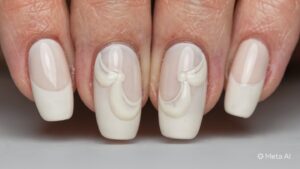
Cream finish, medium depth. Not sheer, not dark. Short squoval.
Why it hides damage: Opaque enough to cover discoloration. Dusty tone doesn’t show tip wear. Feminine but practical.
Best for: Redness around cuticles, white spots, mild ridges.
Shade: Zoya Rue, OPI You Don’t Know Jacques.
5. Jelly “Blur” Shades in Darker Tones
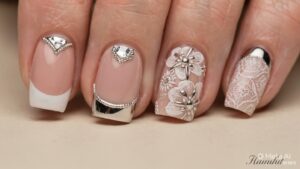
Jelly black, jelly navy, jelly burgundy. 1–2 coats so it’s translucent but pigmented. Short round.
Why it hides damage: Jelly texture is self-leveling and forgiving. Dark jelly hides color flaws, but the translucency hides ridges.
Best for: Staining, yellowing, when you want dark but not harsh.
DIY: Mix 1 drop of black polish + 5 drops of clear top coat.
6. Soft Metallic: Rose Gold or Pewter
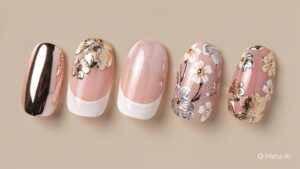
Not chrome, not glitter — soft metallic sheen. Short squoval.
Why it hides damage: The reflective particles scatter light, blurring the texture. Looks intentional and luxe.
Best for: Ridges, uneven surface.
Maintenance: 2 weeks. Metallics show scratches, but on short nails, it’s fine.
Avoid: High-shine chrome — it shows every dent.
7. Milky Pastel: Lavender, Blue, or Green
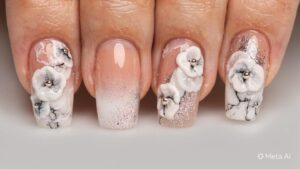
Milky, not sheer, not neon. Must be opaque pastel. Short round.
Why it hides damage: The milkiness blurs. Pastel is happy and draws the eye to color, not texture.
Best for: Spring/summer when you want color but have damage.
Shade: Essie Lilacism, OPI This Cost Me a Mint.
PART 2: STRUCTURE & STRENGTH STYLES — Build Back Thickness
These aren’t just Polish. They add physical structure so your nails stop breaking while they heal.
8. Builder Gel/BIAB Overlay in Sheer Pink
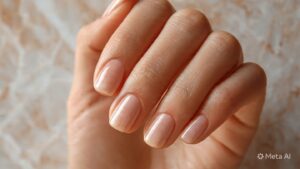
Builder In A Bottle or hard gel applied to a natural nail, no extension. Sheer pink tint. Short squoval.
Why it hides damage: It creates a new, smooth, thick surface. Ridges? Gone. Peeling? Encapsulated. It’s like a cast for your nail.
Best for: Paper-thin, peeling, splitting nails. The #1 rehab method.
Maintenance: Fill every 3–4 weeks. Nails grow out strong underneath.
Ask for: “BIAB overlay” or “structured gel manicure.” Tinted, not clear.
9. Dip Powder in Opaque Nude
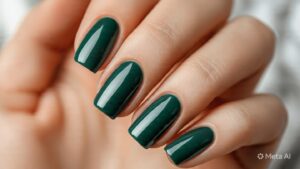
Dip is acrylic powder + resin. It’s thick and strong. Short round or squoval, opaque nude.
Why it hides damage: Dip is the strongest overlay. It will not bend or crack. Completely covers color issues.
Best for: Severe peeling, cracks, or if you’re rough on your hands. Nurses, cleaners, gardeners.
Maintenance: 3–4 weeks.
Warning: Removal is harsh. Only do if the damage is bad. Use a salon that does soak-off, not drill-off.
10. Gel Polish with Rubber Base
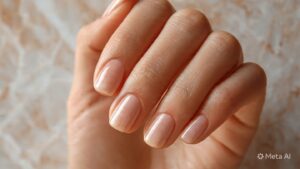
Rubber base is a flexible gel base coat. Then color + top. Short oval.
Why it hides damage: Rubber base flexes instead of cracking. If your nails bend, regular gel shatters. Rubber moves with it.
Best for: Thin, bendy nails that peel.
Maintenance: 3 weeks.
Ask for: “Rubber base gel manicure.”
11. Polygel Overlay, Short
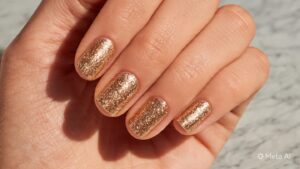
Polygel is a hybrid gel/acrylic. Can be used as an overlay, no extension. Short squoval.
Why it hides damage: Lighter than acrylic, stronger than gel. Creates a perfect surface.
Best for: Deep ridges or dents. You can “fill” the ridge with polygel.
Maintenance: 3–4 weeks.
12. Fiberglass or Silk Wrap Under Gel
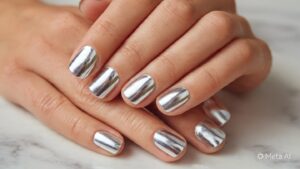
A tiny piece of silk/fiberglass glued over a crack or split, then gel on top.
Why it hides damage: It literally holds the crack together while it grows out. Prevents the tear from getting worse.
Best for: One or two split nails. Not the whole hand.
Maintenance: Lasts until grown out. Tech can fill.
Ask for: “Silk wrap repair” under your gel.
PART 3: SHAPE & LENGTH STRATEGIES — Cut Damage Off Smartly
Sometimes hiding damage means removing it. These shapes make short nails look intentional.
13. Short Round “Active” Nails
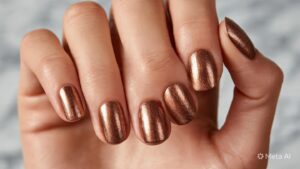
Clip all damage off. Round the edges. No polish or just a clear strengthener.
Why it hides damage: You remove the peeling parts. Round has no corners to snag and re-split. Looks clean, even bare.
Best for: Severe splitting at tips. Starting over.
Maintenance: File weekly to keep edges smooth. Oil daily.
Psychology: Short and round looks deliberate, not “bitten.”
14. Squoval “Micro” Length
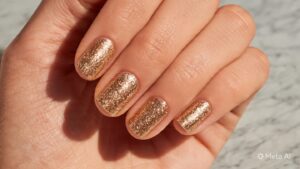
Square with rounded corners, at fingertip. No free edge. Opaque nude polish.
Why it hides damage: If your free edge is destroyed, remove it. Squoval at fingertip looks manicured. Opaque polish covers nail bed flaws.
Best for: Post-acrylic damage where tips are trashed.
Maintenance: 2 weeks. You’ll file as it grows.
15. Short Almond “Rehab” Set
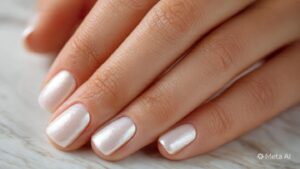
Short almond, but SHORT — 2mm past tip. Builder gel overlay.
Why it hides damage: Almond is strong. The builder gives structure. Short length prevents breaks while you grow.
Best for: Growing out nail-biter nails. The shape guides growth.
Rule: If your nails are paper-thin, don’t go almond. Stick to the round until they thicken.
PART 4: ART & TEXTURE — Distract and Disguise
Smart art draws the eye away from flaws.
16. Reverse French / Half-Moon
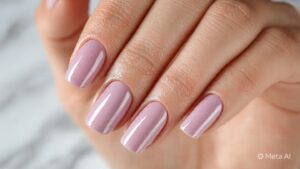
Nude or taupe base, bare half-moon at cuticle. Short squoval.
Why it hides damage: Most damage is at the tip. This design puts focus at base. Also, grow-out is invisible.
Best for: Peeling tips, white spots at edges.
Maintenance: 4 weeks. Longest-lasting art.
17. Scattered Gold Foil
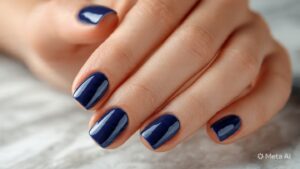
Milky nude base, small pieces of gold foil scattered randomly. Short round.
Why it hides damage: Foil reflects light and distracts from ridges. Looks intentional and luxe.
Best for: Ridges, dents. The foil breaks up the surface.
Maintenance: 2–3 weeks. Encapsulate in gel so foil doesn’t catch.
18. Matte Nude with Glossy Tip
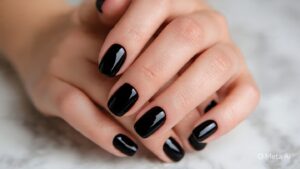
Opaque nude, matte top coat. Then paint just the tip with glossy top coat — “glossy French.” Short squoval.
Why it hides damage: Matte blurs texture. The glossy tip looks like a design, but it’s actually reinforcing the tip where peels happen.
Best for: Peeling free edges.
Maintenance: 2 weeks.
19. Vertical Ombre/Nude to Taupe
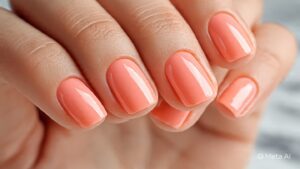
Nude at base fading to taupe at tip. Short oval.
Why it hides damage: Gradient blurs everything. Chips at the tip blend in because the tip is already darker.
Best for: Staining, yellowing at tips.
Maintenance: 3 weeks. No harsh line to grow out.
PART 5: PRESS-ONS & TEMPORARY — Hide While You Heal
When you need instant coverage for an event, and your nails are a mess.
20. High-Quality Press-Ons in Short Round, Opaque
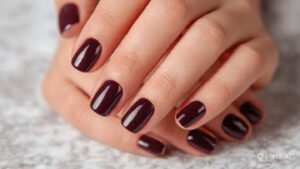
Static Nails, Glamnetic, Olive & June. Short round, opaque nude or taupe.
Why it hides damage: Full coverage. No one sees what’s under. Gives nails a break from polish while still looking done.
Best for: Weddings, interviews, events during rehab. Also, if gel/dip damaged you, and you need a break.
Maintenance: 7–10 days per set. Reusable.
Pro tip: Use glue tabs, not glue, if nails are very thin — less trauma.
21. Silicone Nail Stickers/Wraps with Strengthener
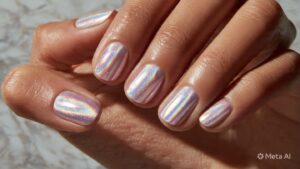
Dashing Diva Glaze, Ohora. Semi-cured gel stickers. Short squoval.
Why it hides damage: 100% coverage, but thin and flexible. Less damaging than acrylic. Add strength while camouflaging.
Best for: Mild to moderate damage. You want color but also protection.
Maintenance: 2 weeks. Cures with a lamp.
Bonus: Easy DIY. No salon needed.
What NOT to Do When Your Nails Are Damaged
- Don’t go long. Length = leverage = breaks. Every millimeter increases the break risk. Cut them.
- Don’t pick or peel gel/dip. You’ll take layers of nail plate with it and make the damage worse. Soak off properly.
- Don’t do sheer pink. I know it’s pretty. It will show every ridge and make you sad. Go opaque or textured.
- Don’t do matte dark colors. Matte shows every dent. Dark shows every chip. The combo is deadly on damaged nails.
- Don’t skip the base coat. Staining will set back your healing.
- Don’t file back-and-forth. It frays already weak nails. One direction only.
- Don’t use nails as tools. This is how you got here. Stop. Use a key.
The Rehab Routine: Heal While You Hide
Hiding damage is step 1. Healing is step 2. Do both.
Daily:
- Cuticle oil 2x/day. Jojoba oil penetrates best. Dry nails peel. Oil keeps them flexible.
- Gloves for water. Dishes, cleaning, and showering. Water expands the nail plate, then it contracts and peels. Gloves or keep it short.
- No picking. Put fidget toys near your desk.
Weekly:
- Gentle buff. Only if the ridges are extreme. Use a fine buffer, one direction, minimal.
- Nail strengthener. OPI Nail Envy, ISDIN Si-Nails, or protein treatment. Use as a base coat.
- File snags immediately. Don’t let them tear.
Monthly:
- Take a break OR do structured gel. Paradox: Constant polish removal damages. But a protective overlay helps. If going bare, use a strengthener. If polishing, use BIAB and don’t remove for 2–3 months, just fill.
- Check your health. Sudden damage can be thyroid, anemia, or a vitamin deficiency. Biotin helps only if you’re deficient. See doc if it’s sudden/severe.
Supplements: Only if deficient. Biotin, collagen, and iron. Don’t overdose — it causes breakouts.
Diet: Protein, water, omega-3s. Nails are keratin = protein.
How to Talk to Your Nail Tech About Damage
Don’t be embarrassed. They’ve seen worse. Say this:
“I’ve got some damage from previous sets/peeling. I want to keep them short and add strength. Can we do a builder gel overlay in an opaque nude? I don’t want length, just coverage and protection. No aggressive filing on my natural nail.”
Good techs will:
- Not judge
- Do not drill your natural nail
- Recommend BIAB, structured gel, or dip
- Keep them short
- Not upsell you long extensions
If they push long acrylics on damaged nails, leave.
Timeline: What to Expect as They Heal
Weeks 1–4: You’re in camouflage mode. #1–#21 above. Nails still feel thin. Don’t expect miracles.
Weeks 4–8: With BIAB or dip, you’ll see growth. The damaged part moves up. You’ll need a fill. Don’t pick.
Months 2–3: The damaged free edge is gone. The nail plate is growing thicker. You can start going longer if you want.
Months 3–6: Full replacement of nail plate. If you’ve been consistent with oil + protection, they should be 80–100% better.
Maintenance after: Don’t go back to bad habits. Keep using oil. Keep them shorter than you think. Use a base coat always.
Damage-Specific Guide
If you have: Peeling/Splitting → #8 Builder Gel, #9 Dip, #13 Short Round. Keep oil on edges 24/7.
If you have: Deep Ridges → #1 Milky White, #3 Glitter, #8 Builder Gel. Ridges need filling. Don’t buff them all away — you’ll thin nail.
If you have: Thin/Bendy → #8 Builder Gel, #10 Rubber Base, #9 Dip. You need structure. Color alone won’t help.
If you have: Yellowing → #1 Milky White, #5 Jelly Dark, #2 Taupe. Use a base coat always going forward.
If you have: White Spots → #2 Taupe, #4 Dusty Rose, #3 Glitter. All opaque. They’ll grow out. Don’t buff.
If you have: One Bad Crack → #12 Silk Wrap + #8 Builder Gel. Save the nail.
If you have: Bitten Nubs → #15 Short Almond with builder, #20 Press-Ons short. Create shape while you grow. Use bitter polish to stop biting.
Final Word: You’re Not Stuck
Damaged nails feel shameful, but they’re just skin. They grow. They heal. And while they do, you have options.
You don’t have to hide your hands. You don’t have to go bare and sad. Pick from the 21 above, book the appointment, and tell your tech, “We’re in rehab mode.”
In 3 months, you’ll look down and see healthy nails. In the meantime, you’ll look down and see pretty nails. Both can be true.
Your nails don’t have to be perfect to be polished. They just have to be protected. Start there.